In 1924, André Breton published the Manifesto of Surrealism and defined the movement with a single phrase:
SURREALISM, n. Pure psychic automatism, by which one intends to express verbally, in writing or by any other method, the real functioning of the mind. Dictation of thought, in the absence of any control exercised by reason, and beyond any aesthetic or moral preoccupation.
Breton meant writing without deliberation — letting the mind speak in its own currents, then seeing what had been said. The Surrealists called it automatic writing, and they treated the results as messages from a deeper agency: the unconscious, the irrational, the "real functioning of the mind."
A century later, the same idea has become the most consequential mode of software production on earth. A coding agent is an automatic writer: it generates code by sampling from a latent distribution of everything it has read, without deliberation, without a plan in the way a programmer plans — and certainly "beyond any aesthetic or moral preoccupation." When Andrej Karpathy named the purest form of this in 2025, he described it in words Breton could have signed: "you fully give in to the vibes, embrace exponentials, and forget that the code even exists." Forget that the code even exists — that is the dictation of thought, with the reason filtered out. Automatic writing, automatic code.
Agentic coding is automatism industrialized, and vibe coding is automatism at its most literal. Everything strange about working with agents — the wonder, the unreliability, the editing, the anxiety — is the strangeness the Surrealists met a hundred years ago. Their answer to it is the most useful theory of vibe coding I know.
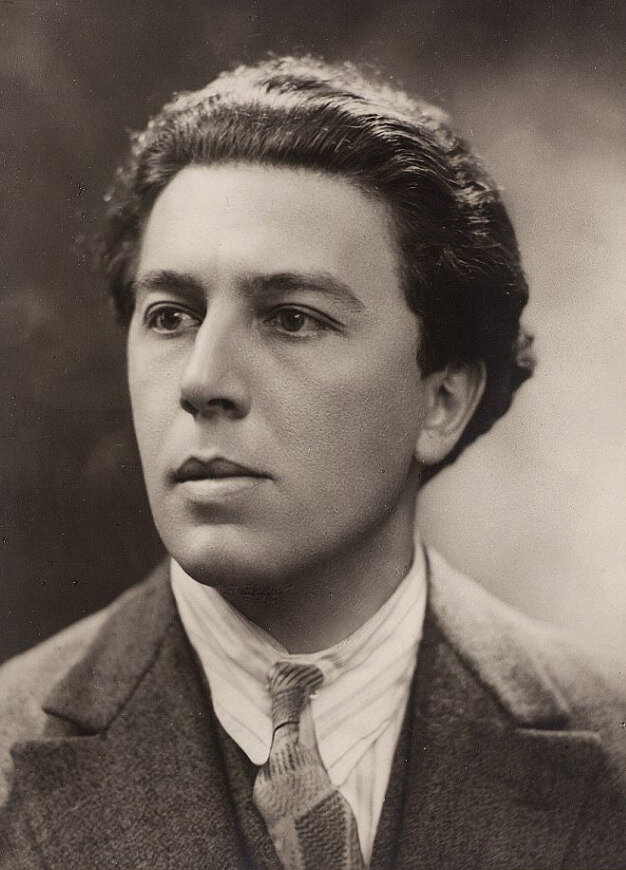
The first automatic writers
The manifesto's definition was written as a dictionary entry — as if the movement already existed and only needed documenting. It was not a theory drawn from nothing. Breton had run the experiment five years earlier, with Philippe Soupault: The Magnetic Fields (1919), written in a few weeks in cafés, as fast as the hand could move, never looking back. The result read like nothing in print: images that did not follow from each other, syntax that kept its shape while sense dissolved. They were not trying to say something. They were trying to let the dictation happen — and when they stopped, they had the movement's founding method.
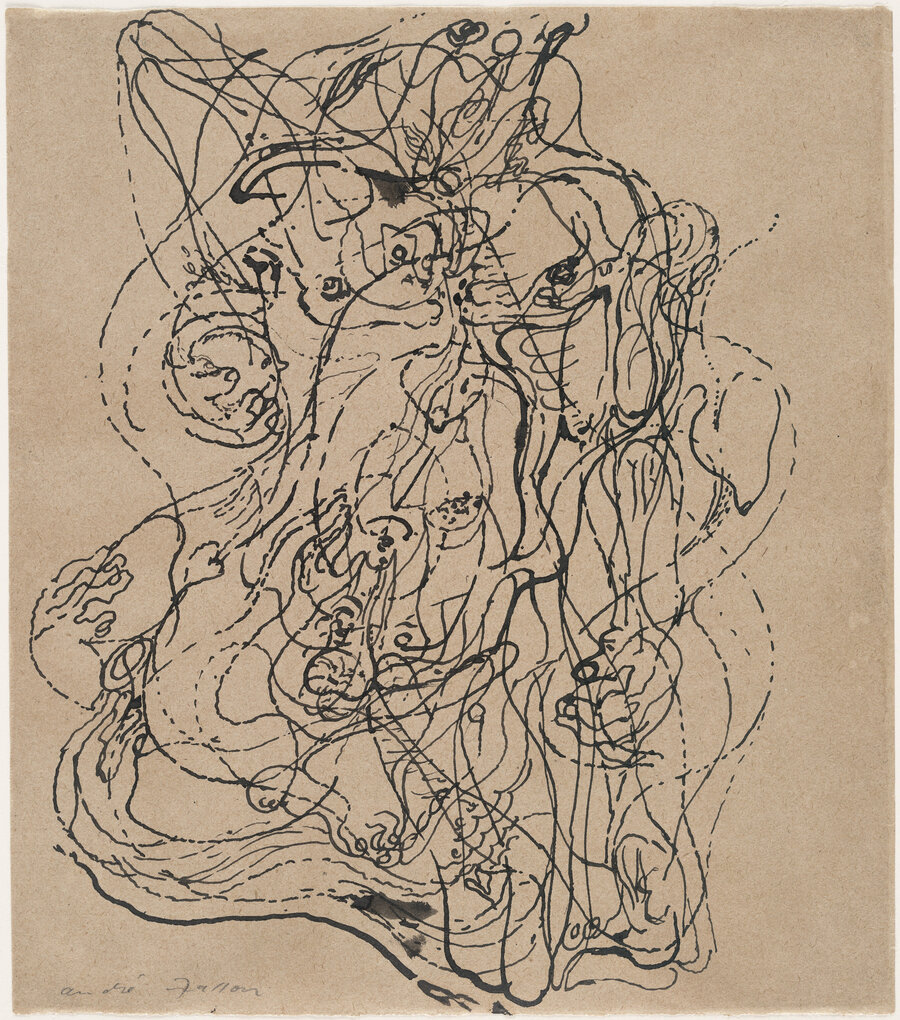
The practice spread to drawing, and the drawings are the closest thing the tradition has to a picture of how vibe coding feels. Masson sat at the paper and let the pen move without an image in mind — the line wandered, crossed itself, tangled — and only afterward, in the looking, did he read what his own hand had produced. Miró built canvases from the same improvisations; Ernst pressed frottage and scraped grattage to let the material itself suggest the image. The method was always the same: produce automatically, then look. The looking was not optional. It was the second half of the method — the half that made it art instead of noise.
The automatic, controlled
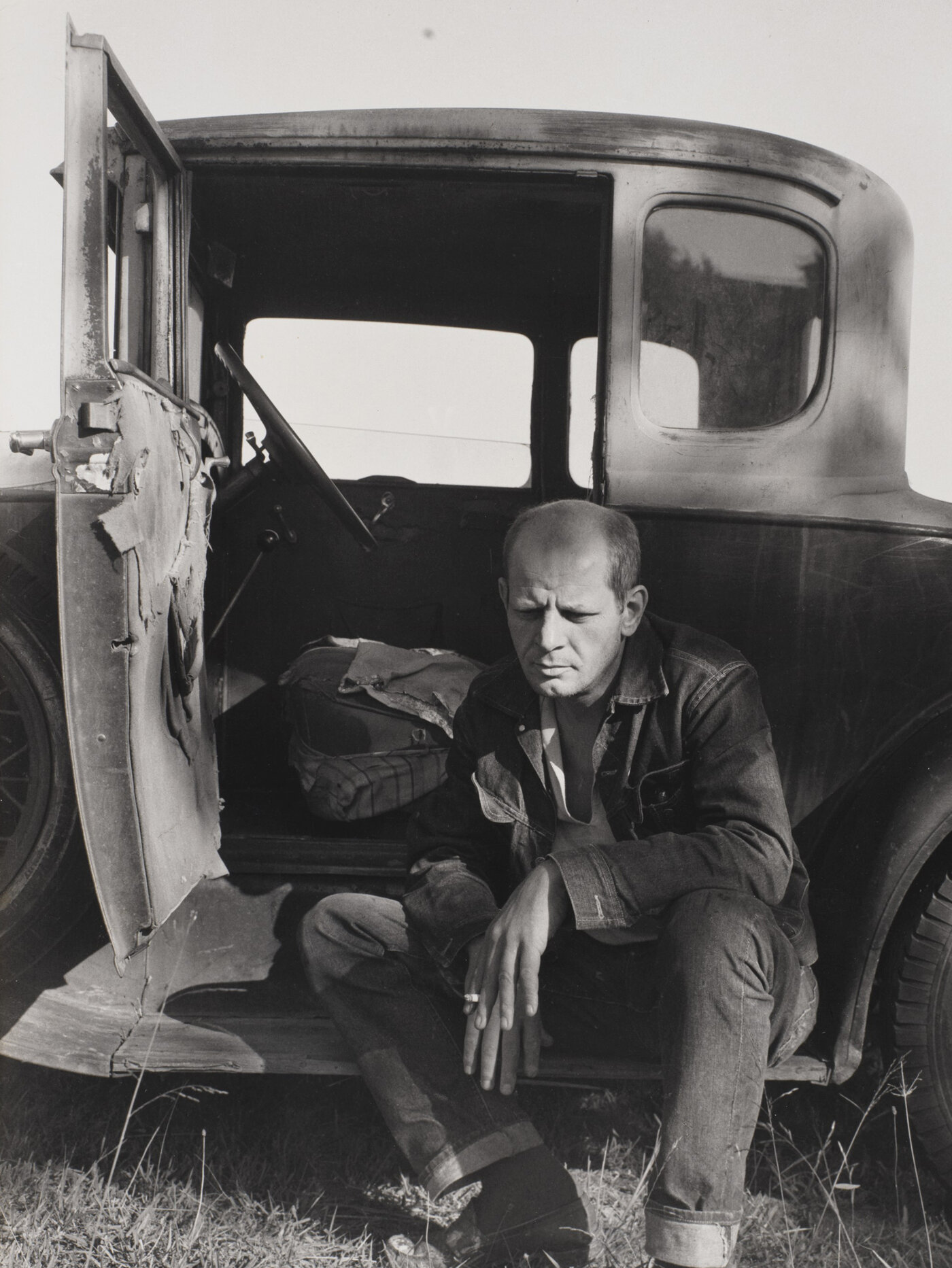
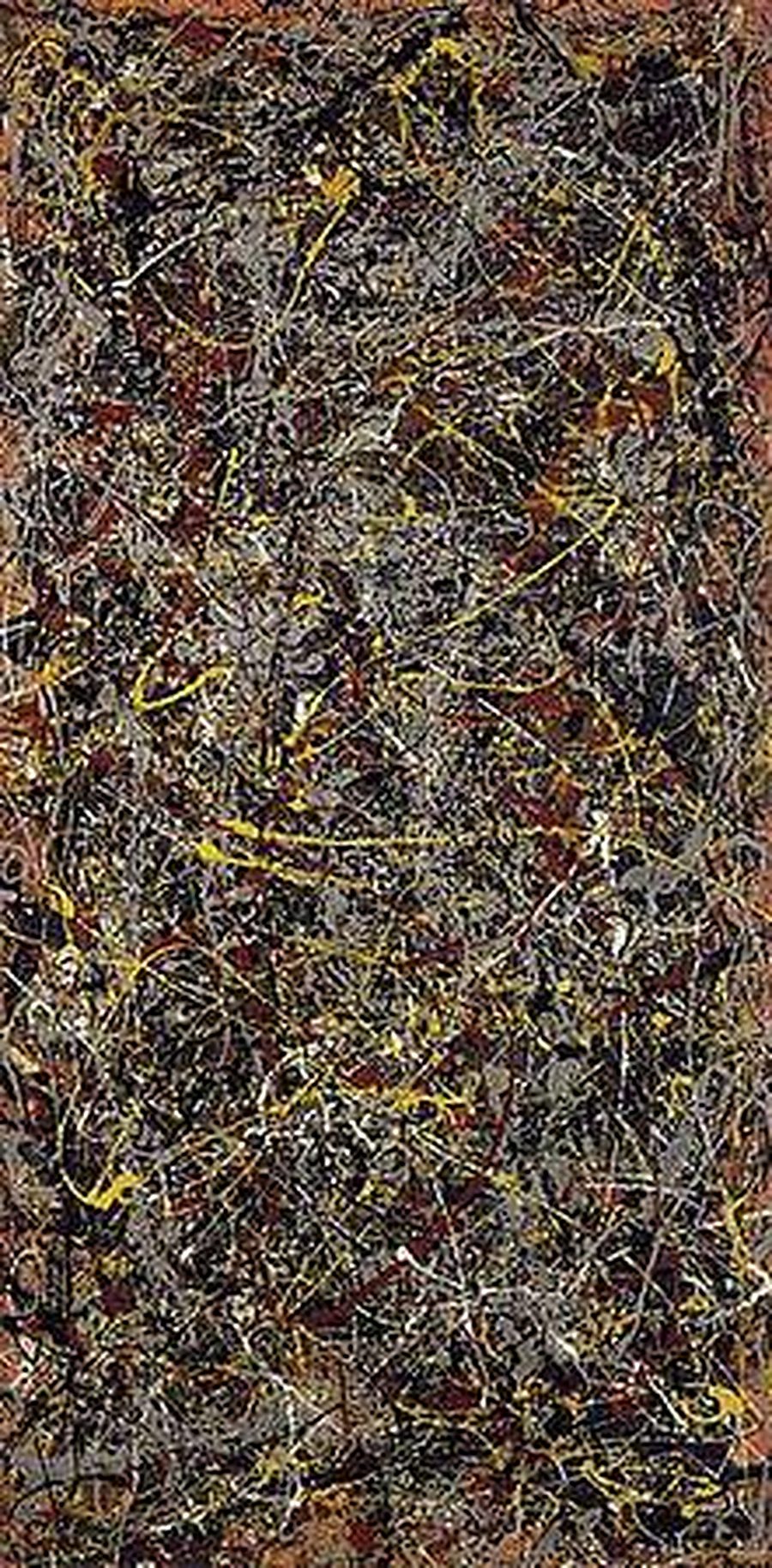
Jackson Pollock belongs in this lineage. In the late 1930s, in the drawings he made during his Jungian analysis, he practiced exactly this method: letting the line run without intent, then reading the drawing for what it revealed. A decade later, the method scaled from the page to the floor, from the line to the pour. No. 5, 1948 — the painting that would later become the most expensive ever sold at auction — is the pure product of that method: four by eight feet of enamel and paint poured from above, the automatist gesture at full scale.
When I am in my painting, I'm not aware of what I'm doing. It is only after a sort of "get acquainted" period that I see what I have been about... the painting has a life of its own. I try to let it come through.
That is an automatist's account of his own method. But Pollock added the half the lay view always forgets:
It is only when I lose contact with the painting that the result is a mess.
And when asked directly whether the pours were accidents: "I deny the accident. I can control the flow of paint."
The automatic was the source; control was the craft. The two were not opposites. The pour only worked while the body that produced it stayed in the loop — acting, stepping back, seeing, acting again. The same gesture, without the control, was just paint on canvas.
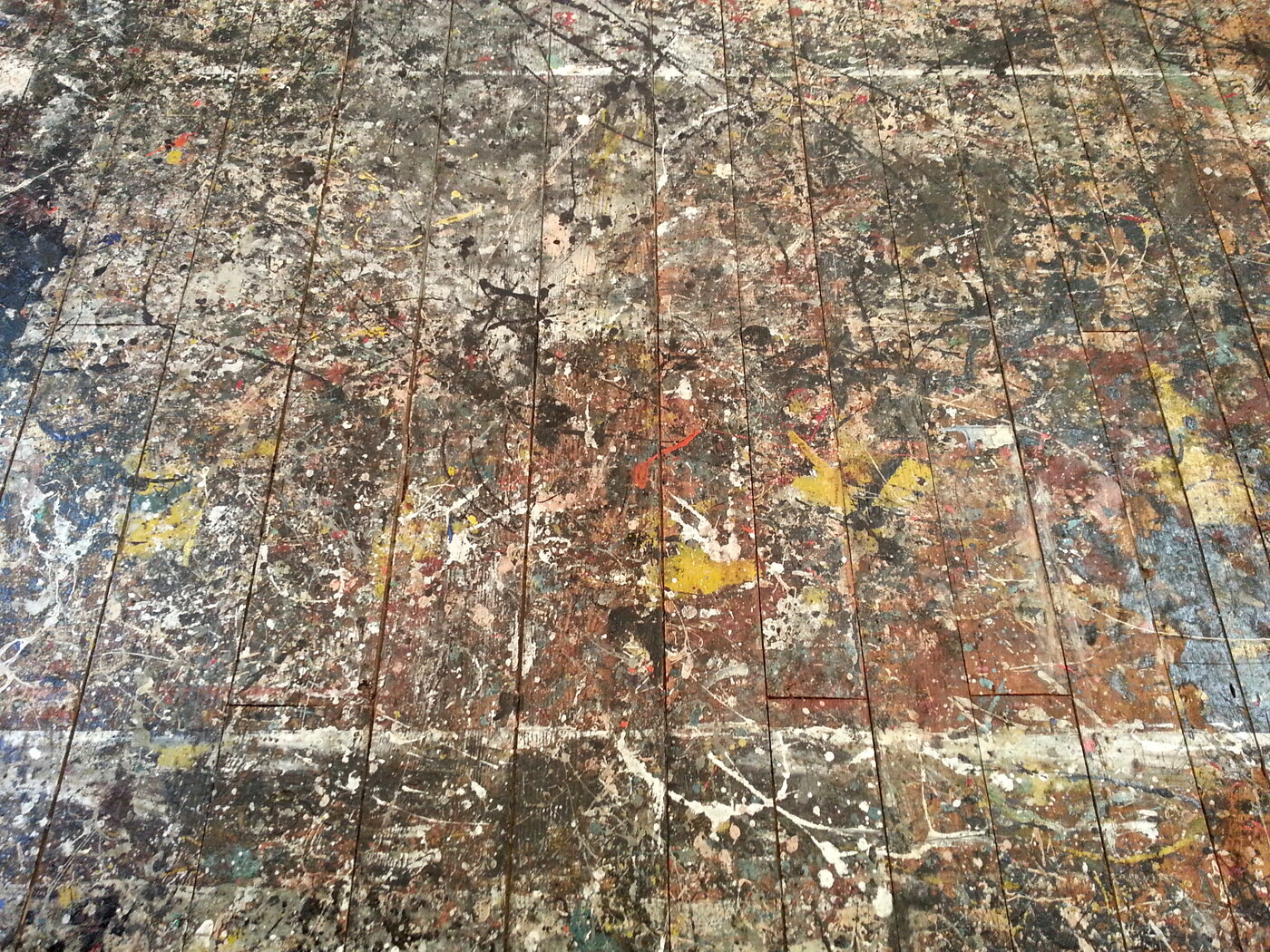
Pollock himself traced the floor method to an older lineage: "This is akin to the method of the Indian sand painters of the West." The sand painters also worked on the ground, in ceremony — with one decisive difference. When the ceremony ended, they erased the image. Pollock kept the trace. And the floor of his studio kept a trace even the canvases did not: the overflow of every session — the misses, the overpaints, the drips that never made it onto a canvas — preserved in the wood like a log. The floor is the first process record, the ancestor of the action stream and the replay: decades later you can still read what happened in that room, including the paintings that no longer exist.
What an agent is
A coding agent is the most literal automatic writer ever built, because its generation is genuinely opaque to deliberation. When the model emits code, no part of it reasons the way a programmer reasons. It samples from a learned distribution of tokens — a statistical unconscious containing the accumulated text of the world. The output issues "in the absence of any control exercised by reason," exactly as Breton prescribed, and with no aesthetic or moral preoccupation whatsoever.
The "dictation of thought" is literal too, and the thought being dictated is not the engineer's. It is the training distribution's — the aggregate of every repository, every discussion, every pattern the model absorbed. The agent is an unconscious at scale, and it writes.
This is why vibe coding feels the way automatic writing felt. The output is real, sometimes astonishing, and consistently unreliable in ways that defeat introspection. The model cannot tell you why it wrote what it wrote. Neither could Masson's hand. It writes like someone, and it is no one — which is why the interesting part is what you do next.
The editor's craft
The Surrealists discovered within a decade that pure automatism produces mostly mediocrity. The Magnetic Fields was astonishing; the practice of magnetic fields, repeated, was not. What saved the movement was editing: Breton curated relentlessly — cut, revised, chose which dictations to keep — and the painters composed and corrected after the automatic pass. The art lived in the relation between the automatic and the deliberate.
The same discovery is being made, at industrial scale, about agents. The pure-automatist version of the practice — accept the output, skip the looking — is vibe coding in its purest form, and it is The Magnetic Fields repeated: astonishing once, mediocre as a method. The prompt is the séance — the conditions under which the dictation happens. The harness is the editing table: the tests that cut what fails, the evals that rank what survives, the sandbox that keeps the automatic from doing damage while it works. The engineer's craft has moved entirely into that relation. You cannot make the automatic better by staring at it. You make it better by changing its conditions and editing its output.
The Surrealists had a game that made the same point visible. In the cadavre exquis — the exquisite corpse — each player drew a section of a body on folded paper, blind to everyone else's, and the sheet was unfolded at the end. The game took its name from the first sentence it produced: le cadavre exquis boira le vin nouveau — the exquisite corpse will drink the new wine. The results are the movement's best argument and its best joke: heads that belong to no body, syntax that belongs to no one.
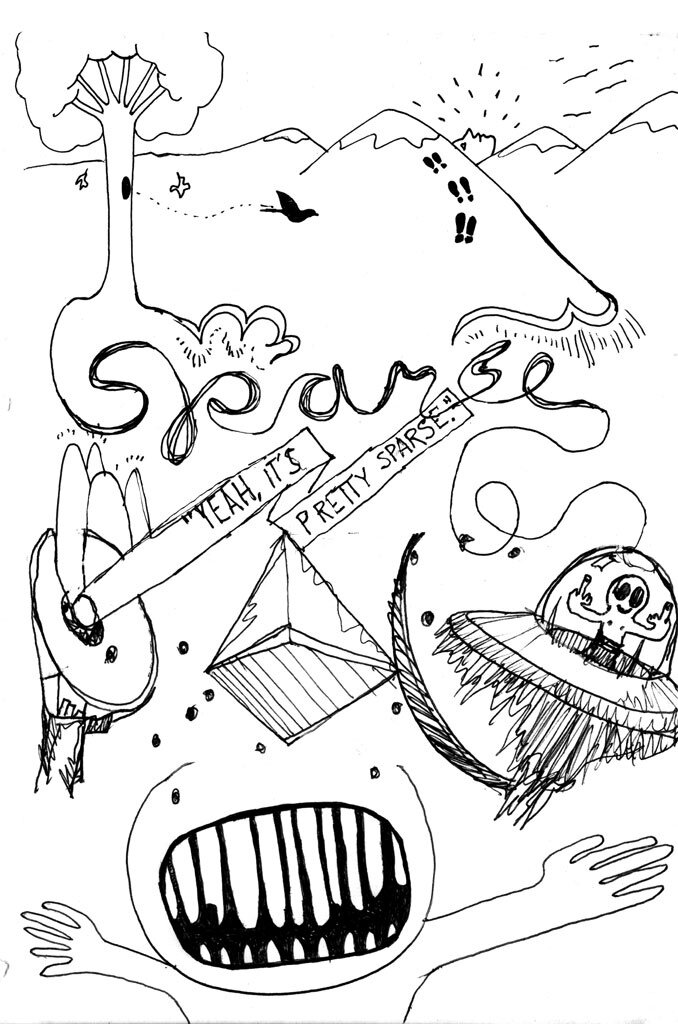
Multi-agent workflows are the exquisite corpse at scale: each context writes a fragment blind to the whole, and the whole is only ever assembled at the end — by the harness, or not at all. Automatic output has no single author and no single intention. Coherence has to be imposed from outside, by the spec, the contract, the game master. The spec is the architect; the agents are the automatic; the editor is you.
Judgment without introspection
The hardest question automatism poses is: how do you know the automatic output is good? Neither the artist nor the model can answer by consulting intention — there was none. The Surrealists answered with an external test: the image — the sudden resonance of distant realities meeting. The image could not be explained, only recognized.
Surrealism's own history contains the warning, painted in the movement's other half. Magritte was the counterweight inside the group: where Breton sought the unconscious through unpremeditated marks, Magritte built each image with the deliberation of a cabinetmaker, and the tension between the two poles ran through the movement's entire history. His most famous painting is a manifesto against mistaking representation for reality:
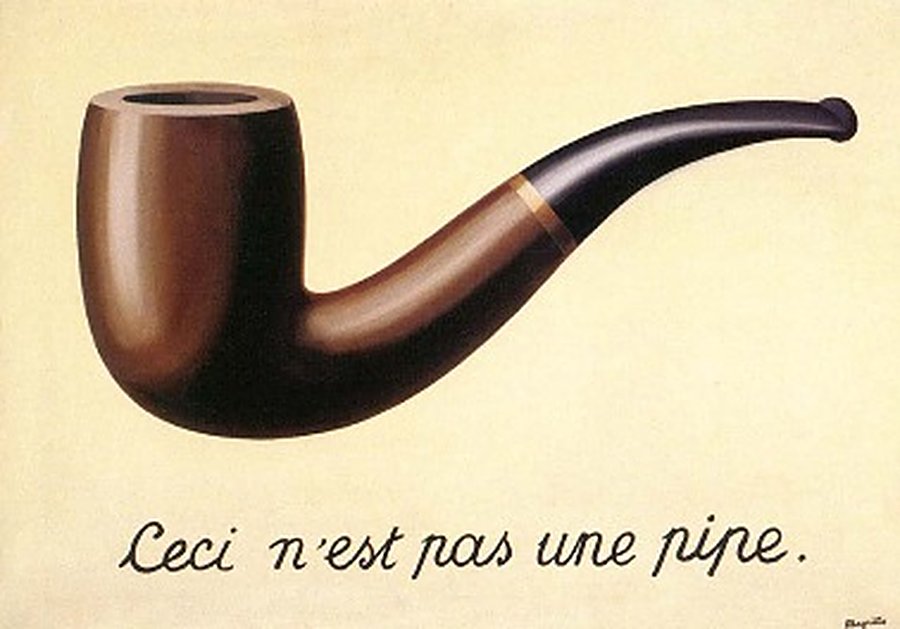
Ceci n'est pas une pipe. Of course it is not a pipe. It is paint arranged to look like a pipe. The treachery is that it works anyway: you read it as a pipe and only the sentence beneath it — itself another representation — breaks the illusion. Magritte's whole point is that resemblance is precisely what makes the lie possible, and that representation is not identity.
This is the trap vibe coding sets. The agent's output is not engineering. It is a representation of engineering — tokens arranged to look like code, sampled from everything code has ever looked like. It resembles working software the way the painting resembles a pipe. Accept the resemblance without testing and you are doing what Magritte's sentence stops you from doing: taking the picture for the thing. The eval is the act of trying to smoke the pipe. The test is the treachery broken.
Code has the advantage that its external test is sharper: does it run, does it pass, does the system behave? The eval and the test suite are the criterion the automatist tradition never had. But a residue remains that evals cannot reach — the judgment of whether the automatic solution has the right shape, whether the surprise is a genuine find or a seductive artifact. For that you need the record of the making: the plan, the action stream, the replay — the trace of what the agent did, not just what it produced. You judge the dictation by its process as much as by its product.
The danger of losing contact
The Surrealists' history is a caution about what happens when the relation degrades. Automatism hardened into a style; Breton spent the 1930s excommunicating members over how much control the method allowed. When the automatic is trusted wholesale, the output becomes mannerist — fluent, plausible, empty. When it is distrusted wholesale, the source dries up.
The equivalent failure in agentic coding is delegation without judgment — vibe coding practiced without the looking half. Vibe coding is fine for throwaway scripts, the automatist sketch, the one-session Magnetic Fields; as a permanent mode it is the loss of contact. The engineer who accepts whatever the agent produces stops exercising judgment, and judgment, once unused, decays. The trial covered on this blog found exactly this — programmers who delegated their learning to an AI scored 17% lower on what they were supposed to learn.
Pollock's own arc is the cautionary tale, and it is more literal than it sounds. After the 1950 season — the year Namuth filmed him — the great pours stopped. In the last six years of his life he painted comparatively little, drank heavily, and destroyed or abandoned much of what he made. The technique was intact. The contact was gone — and without the contact, the automatic produced nothing worth keeping. His rule is the law of the whole practice: the result is a mess when you lose contact with the painting. The automatic needs the contact.
Conclusion
Breton wanted to hear the mind speak without the interference of reason. A century later, we have built a machine that does it — at the scale of whole codebases. Automatic writing has become automatic code — vibe coding, in the culture's word — and the discipline that makes it work is the discipline the Surrealists spent a decade learning: produce automatically, then look; control the conditions, edit the output, judge by external criteria, keep the surprises worth keeping, and never lose contact.
The dictation is automatic. The engineering is not. That is the whole art.
References:
- André Breton. Manifesto of Surrealism, 1924. — the definition of "psychic automatism... in the absence of any control exercised by reason."
- Automatism — Art Term, Tate. — the canonical definition: the term borrowed from physiology for bodily movements that are not consciously controlled (breathing, sleepwalking), via Freud's free association to Breton's dictation of thought.
- André Breton & Philippe Soupault. The Magnetic Fields (Les Champs Magnétiques), 1919. — the first automatic text, written in cafés as fast as the hand would move.
- André Breton, photograph by Henri Manuel — public domain; embedded in "The first automatic writers."
- Automatic drawing by André Masson (c. 1925) — public domain reproduction; embedded in "The first automatic writers."
- André Masson, Joan Miró, Max Ernst — automatic drawing, frottage, grattage, and the method of producing automatically then looking.
- Astonishing Examples of Automatic Drawing, Artsper Magazine. — the drawing-side companion to the automatic writings: the practice of bypassing conscious control, with examples.
- Andrej Karpathy. Vibe coding, February 2025. — the coinage of the practice this post reads as automatism's purest form: "you fully give in to the vibes... and forget that the code even exists."
- René Magritte. The Treachery of Images (La trahison des images), 1928–29. — "Ceci n'est pas une pipe": the deliberate pole of Surrealism and the standing warning that representation is not identity. Los Angeles County Museum of Art. Embedded above; low-resolution fair-use reproduction via Wikipedia, upscaled for display. (See also Michel Foucault, This Is Not a Pipe, 1973.)
- Jackson Pollock. My Painting. Possibilities I (1947–48), ed. Harold Rosenberg. — the get-acquainted period; "the painting has a life of its own"; "it is only when I lose contact with the painting that the result is a mess"; the kinship with "the method of the Indian sand painters of the West."
- Pollock, "I deny the accident. I can control the flow of paint" — interview with William Wright, 1950 (recorded for radio, aired posthumously).
- Hans Namuth photograph of Pollock painting on glass, 1950 — public domain; embedded at the top of this post.
- Jackson Pollock, No. 5, 1948, 1948 — oil and enamel on fiberboard, 121.9 × 243.8 cm, private collection. Embedded above; low-resolution fair-use reproduction via Wikipedia, upscaled for display.
- Pollock-Krasner House studio floor, photo by Rhododendrites — CC BY-SA 4.0; embedded in "The automatic, controlled."
- Cadavre exquis drawing, photo by DIYLILCNC — CC BY-SA 2.0; embedded in "The editor's craft."
- Related: Finding David in the Marble — the strike-assess loop, and the same act-then-look rhythm.
- Related: You Don't Learn What You Delegate — what delegation costs the actor's judgment.
- Related: Harness Engineering (Martin Fowler) — the harness as the editing table.
- Related: Agent Harnesses Need Tasks That Fight Back — the automatic needs resistance to mean anything.
- Related: Codebases in the Era of Agentic Software Engineering — the spec is the architect, the agents are the builders.
- Related: Conceptual Integrity and the One-Mind Rule — coherence imposed on multi-authored output from outside.
- Related: OpenWorker: Outcome Layer — the record of the making as a first-class artifact.
- Related: LLMs Can't Jump — what the automatic cannot do: the leap from experience to axioms.
- Related: Sandboxing AI Agents — securing the vibe coding stack, in Replit's phrase.
- Related: Harness Engineering Best Practices for AI Agents — tests are better than vibes: the looking half, made explicit.